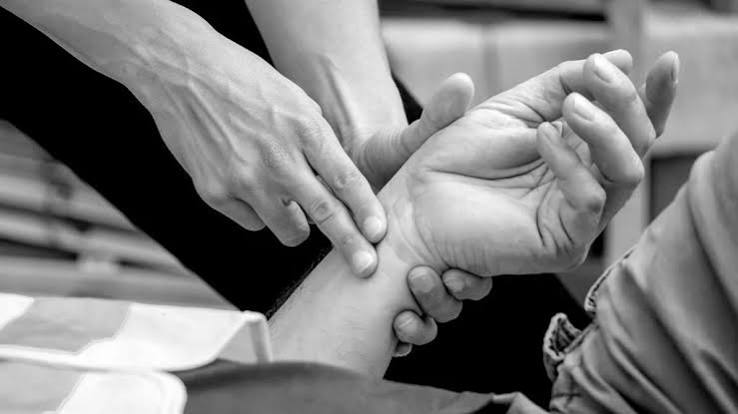
What would you do if someone passed out next to you and you were the only person around.Would you try and shake them awake? Would you try listening for a heartbeat or look for a pulse? Or ( really unpopular answer) would you run away and leave them there? ( Look, no one is judging you- people nowadays are ready to feign illness just to rob you especially in the big city). BUT all factors held constant any normal decent person would want to help.
It was this premise that opened up our First Aid Session facilitated by the truly brilliant Lucy Kwe who has a background and extensive experience in Disaster and Project Management. She started off by asking us our individual goals for the session- mine were two. One, I have four kids under the age of 5 but particularly wanted to know how to handle choking since I have one year old twins who are in that explorative phase and are prone to such incidents. Secondly, I have to admit that I have worked my whole professional life in Production without having any major medical emergency on set or stage until a few months prior when someone ended up with a sprain during our tech week. Luckily it wasn’t serious but it woke me up to the reality of how much more serious it could have been for everyone involved.
The whole point of First Aid is to preserve life, promote recovery and prevent the situation from worsening. It can also be defined as planning for treatment by improvising and using available materials before advanced care.
So back to our first scenario-did you know that there are steps to assisting someone in such a situation? We learned a bunch of acronyms that were meant to help us remember said steps. For instance we have DRABC.
First, you are going to assess the situation for Danger– not only for the patient but for yourself, you don’t want to end up as the next casualty. Once you are all clear of danger kneel next to your patient and check for a Response– how you ask? By calling their name ( if you know it) or shouting ‘Sir/ Madam can you hear me?’ If that doesn’t work you are going to start inflicting pain, pinch ears, squeeze shoulders anything that will illicit a reaction. For babies under the age of 1 you are going to tap the soles of their feet to check for alertness.
Next step is to check that their Airway is clear, nothing blocking their airway. Tip the head back ever so slightly to open it up.
After this you have to assess Breathing, you will look and see that there is rise in their chest or that you can hear breathing by putting your ear close to their nose.You are checking for their pulse – the carotid pulse ( the one in the hollow in your neck with your two index fingers.) You are going to do this in the space of 10 seconds.
If the person still remains unresponsive and not breathing you are going to have to aid Circulation by administering chest compressions.30 second power pumps to the sternum, 2 mouth to mouth resuscitations for at least two minutes ( 5 cycles). You need to do this at least twice. By this time it is hoped or assumed that your patient is coming to-and that the ambulance you called ( yes you should have done that by the time your ten second count is over) has arrived to take your patient to hospital.
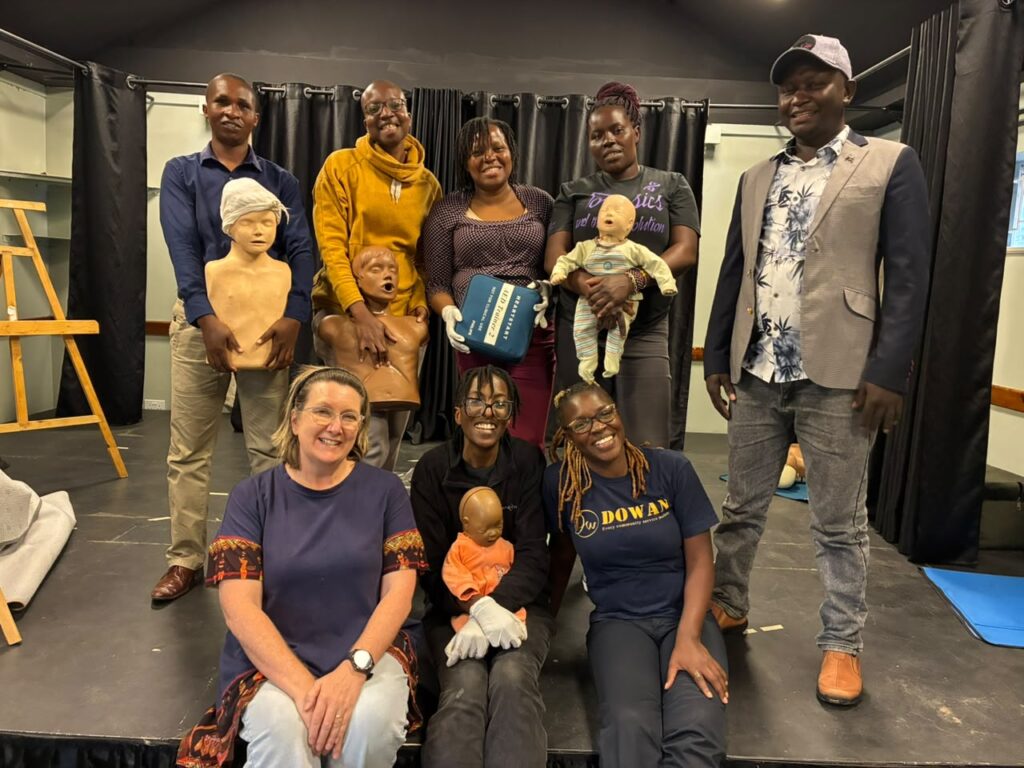
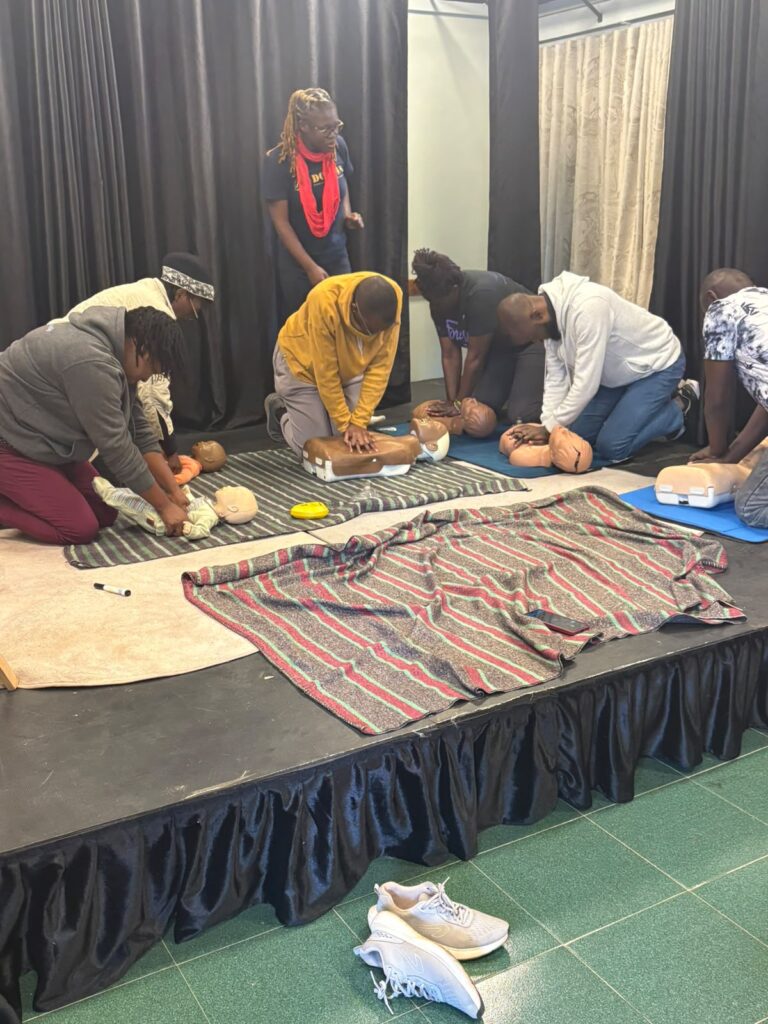
The session was filled with lots of practical exercises and we all took turns working on the dummies adult, child and baby size which are actually called CPR Manikins.
The most famous and iconic historical brand name for the CPR manikin, often referred to as Resusci Annie, CPR Annie, or Little Anne.According to Google, It was created in 1960 by Laerdal Medical, and its face was modeled after an unidentified drowned young woman from the late 19th century (L’Inconnue de la Seine)- Remember that famous Micheal Jackson song ‘Annie are you okay, Annie are you okay are you okay Annie?’ That’s where that phrase is from.I have been dying to use this fun fact if you can’t already tell.
We worked on each other as well , with the Recovery Position which is used for patients that are unconscious but breathing and pulse is present. Such patients could be someone who has had a seizure, has fainted, recovering from an overdose, has had a minor head injury or has started breathing normally after CPR.
Oh and yes I did get to practice what to do if my baby chokes. It consists of some strong back blows alternating with chest thrusts-(focused pressing on chest area to dislodge the offending item )after which you can turn them over to spit out whatever was harming them. NEVER put your finger in their mouth to try remove it because you might push the food further back and cause more problems. Another fun fact- for babies ( 1 year and below) you take a brachial pulse checked in the inner side of the upper arm, press on there and you should be able to feel something.
We covered burns and scalds where the aim is to cool the wound. So don’t put Vaseline, or honey or toothpaste- all these could trap heat and contaminate the wound. ( I have to be honest I wondered who would put this on a burn as a means of treatment but apparently people do this).
Don’t try and rip out the clothes from the wound if it’s stuck on the skin because it could rip with skin tissue. Do not put ice either, extreme cold causes blood vessels to tighten rapidly, cutting off the vital blood flow that damaged tissue needs to heal – think of what frostbite would do,we certainly don’t want that. Instead run the wound under cool running water, cover the wound( use cling film or white cotton sheet wrapped loosely NOT fluffy material)and rush to hospital.
A bit of role play was employed where we got to learn about dressing a bleeding wound- I was a patient who had a gaping wound demonstrated by a long dark line drawn on my arm. I should have started passing out but I thought it might be doing too much for this class demonstration.
While I had fun being the patient, I struggled with being the capable nurse-the various patterns of binding were tough for me to grasp. I guess this is the stuff that we practice in our spare time with our take home manuals( yes- every person walked away with one). All I know is that you need to arrest the bleeding and keep the limb elevated.
We worked with splints too for broken bones and learned how to properly bind and lift a person safely who had a fracture from point A to point B. There were patterns here again ( at least I remember a number 8 that needed to be formed somewhere,) we needed to make sure to secure joints and we learned about how to properly lift without injuring our backs or dropping the patient( it can happen).
We went through scenarios where you might not be able to have the time to do all of the fancy shmancy stuff and you might have to drag someone to safety or if you are feeling really strong and in a hurry you could do the Honeymoon Lift or the Fireman Lift which was particularly impressive because Lucy herself was able to lift a grown man onto her shoulder…like what??
All this to say the difference between life and death is literally what you do in the first few minutes of an emergency. Sometimes even someone who has undergone training panics and when that happens you want to ask for help- remember it’s not about your ego but about joining forces to make sure that someone gets the best care available to them.
With this basic ( yes this was basic) we were sent forth into the world with the belief that if and when it came to it we would be fully equipped to help a person in need. First Responder Mildred Sakina reporting for duty!